
The 2004 Indian Ocean Tsunami
On December 26, 2004, the ocean began to move on a scale almost impossible to imagine.
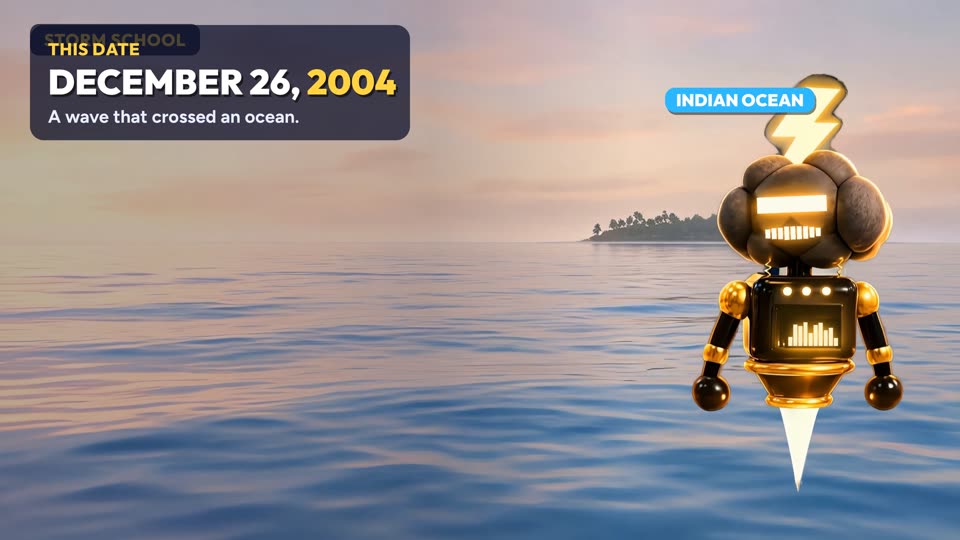 Video landing soon!The bots are polishing this one. Scroll down for the full story.
This page is about a real disaster in which a great many people lost their lives. We tell the story to understand how tsunamis work and how warning systems protect people today.
The quick answer
A tsunami is not really weather. It is a series of ocean waves, usually set off by an undersea earthquake. In 2004 one of the strongest earthquakes ever measured shook the seafloor near Indonesia and sent waves across an entire ocean. What the world learned from it now helps keep people safe.
How it works
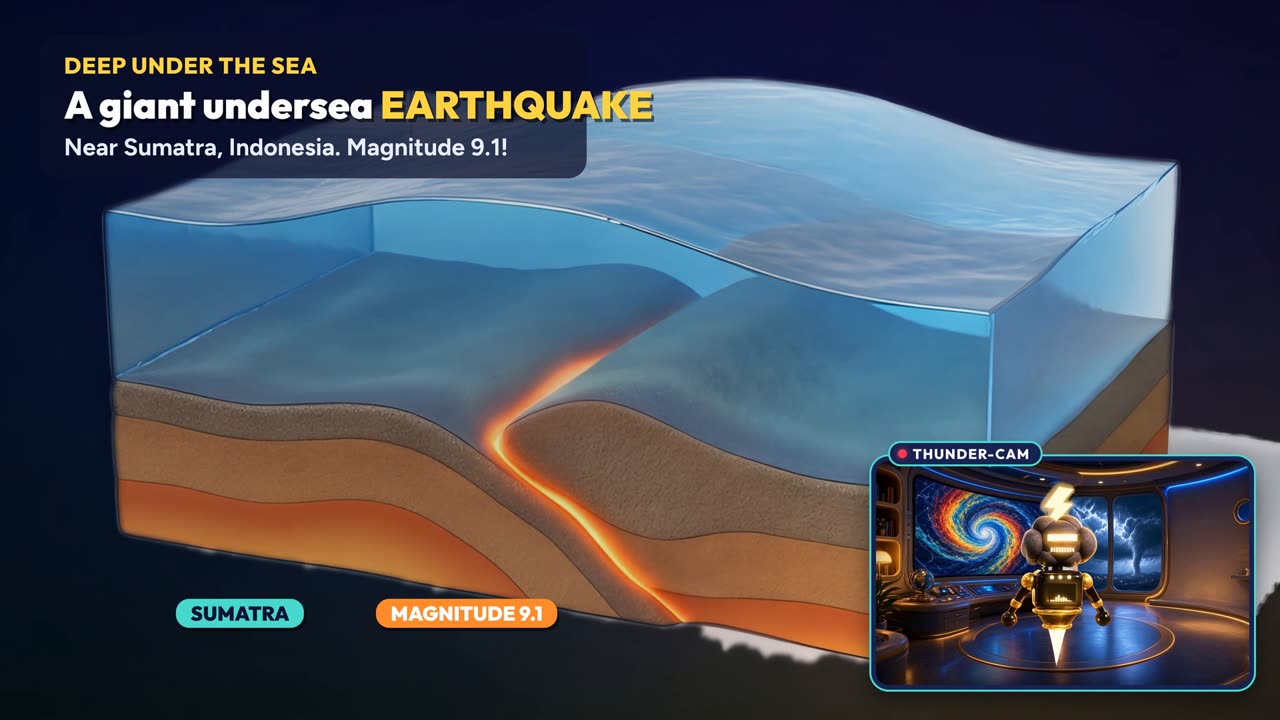
A giant undersea earthquake
Deep under the sea near the island of Sumatra, two huge pieces of Earth's crust suddenly slipped. The earthquake measured magnitude 9.1.
The seafloor shoves the ocean
Part of the seafloor jolted upward and pushed the water above it. That push started waves spreading out in every direction, like ripples from a stone, only unimaginably bigger.
Fast and hidden in deep water
Out in the deep ocean a tsunami can travel about as fast as a jet plane, roughly 500 miles per hour. But the wave there is low and very long, so a ship might barely notice it passing underneath.
Slower and taller near shore
As the wave reaches shallow water the front slows down, the water behind catches up, and it piles higher and higher.
What changed afterward
In 2004 the Indian Ocean had no tsunami warning system. Today it does. Ocean sensors, earthquake stations and warning centers work together to spot tsunamis quickly and send alerts.
Thunder Tidbits
- The waves reached more than a dozen countries. Some arrived in East Africa, thousands of miles away, about seven hours after the earthquake.
- Ten-year-old Tilly Smith was on a beach in Thailand that morning. She had learned about tsunamis in geography class two weeks earlier, recognized the warning signs in the water, and told her parents. The beach was cleared in time.
- The Indian Ocean Tsunami Warning System began operating in 2006.
Words to know
- Tsunami
- A Japanese word meaning 'harbor wave'. A series of waves caused by a sudden movement of the ocean.
- Magnitude
- A number that describes how much energy an earthquake released.
- Displace
- To push something out of its place.
- Warning system
- Sensors and people working together to detect danger and alert everyone quickly.
Try it: Make a wave pile up
Fill a long baking dish or plastic tub with a few centimeters of water. Prop one end up on a book so the water is shallow at that end. Give the deep end a single gentle push with a flat piece of plastic and watch the ripple as it reaches the shallow end. It slows down and climbs.
Stay safe
If you are at the coast and feel a strong earthquake, or see the ocean suddenly pull far back from the shore, do not wait and do not go look. Move to high ground right away and stay there.
Quiz yourself
Say your answer out loud, then tap to check.
What caused the 2004 tsunami?
A magnitude 9.1 earthquake under the sea near Sumatra, Indonesia.
Is a tsunami faster in deep water or shallow water?
Deep water. It slows down and grows taller near shore.
What is one natural warning sign of a tsunami?
The ocean suddenly pulling back from the shore, or a strong earthquake at the coast.
For grown-ups: where the facts come from
Keep exploring
 Video landing soon
Five of the Strangest Weather Events
Ready for weather that sounds made up, but really happens?
Video landing soon
Five of the Strangest Weather Events
Ready for weather that sounds made up, but really happens?
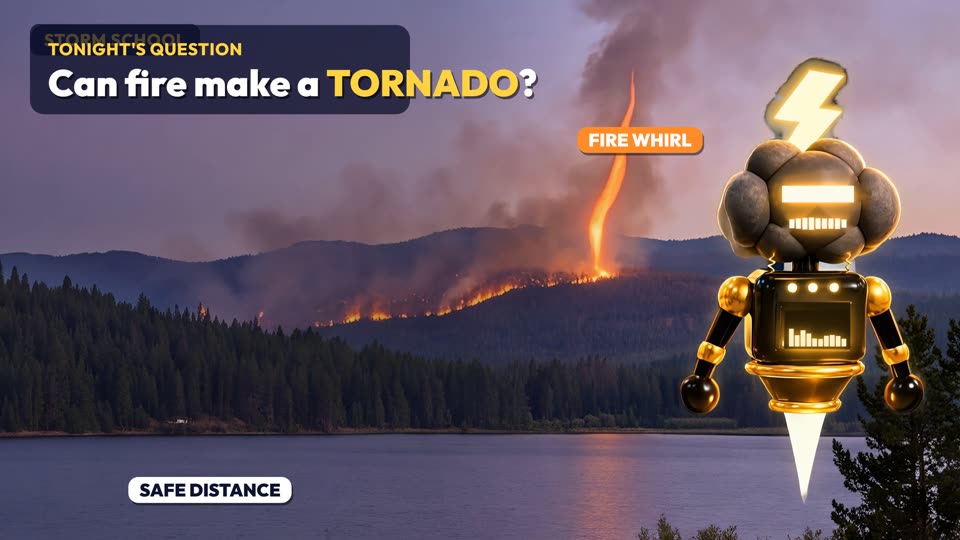 Video landing soon
What Is a Fire Tornado?
Can a wildfire really make something that looks like a tornado built out of flames?
Video landing soon
What Is a Fire Tornado?
Can a wildfire really make something that looks like a tornado built out of flames?
 Video landing soon
How Do Scientists Rate Tornadoes?
EF1, EF3, EF5. You hear the numbers on the news. Who decides, and how?
Video landing soon
How Do Scientists Rate Tornadoes?
EF1, EF3, EF5. You hear the numbers on the news. Who decides, and how?