
Why Are Sunsets Red and Orange?
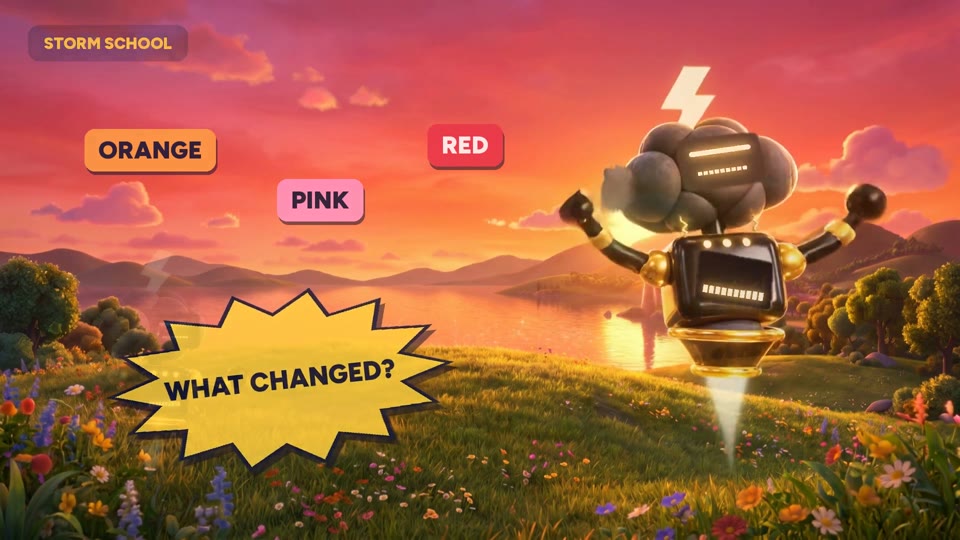
The sky is blue all day. Then the Sun starts to set and everything turns orange, pink and red. What changed?
 Video landing soon!The bots are polishing this one. Scroll down for the full story.
The quick answer
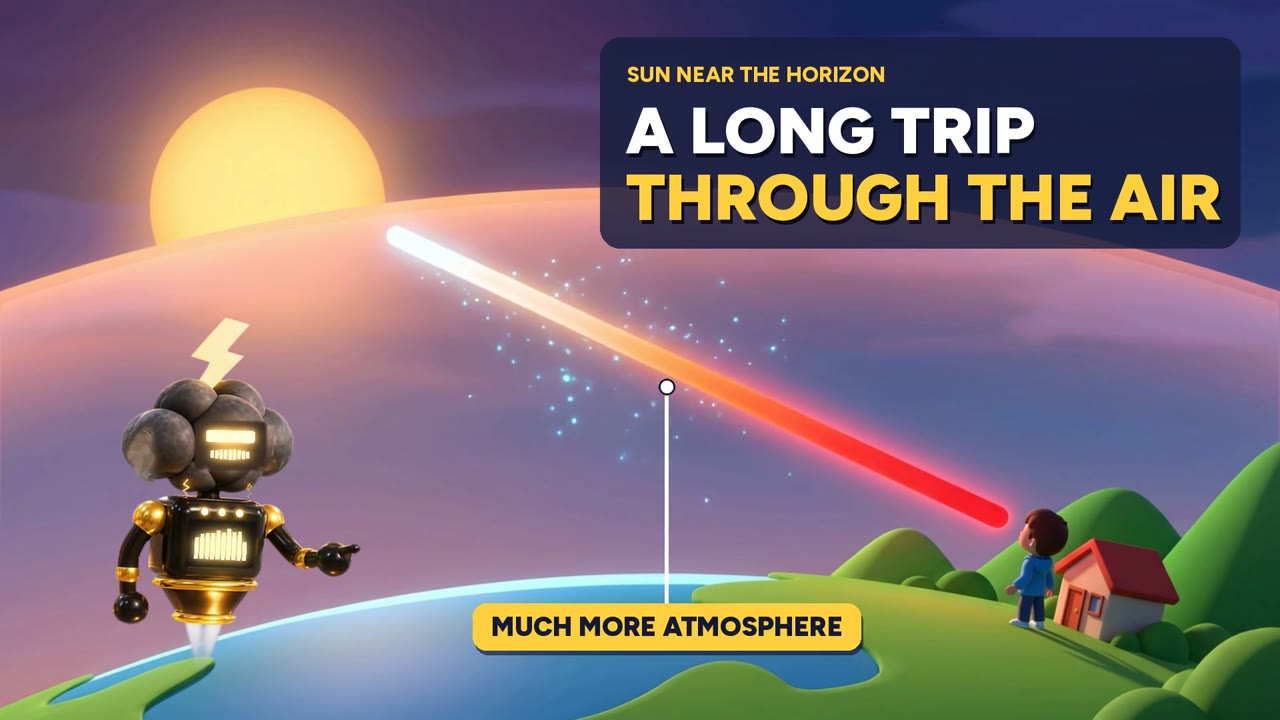
Nothing changed about the Sun. What changed is how much air its light has to pass through. At sunset, sunlight takes a much longer trip through the atmosphere. The blue light gets scattered away along the trip, and the orange and red light is what makes it to your eyes.
How it works
Sunlight is every color
Sunlight looks white, but it is really all the colors of the rainbow mixed together. Each color travels as a wave. Blue light has short waves. Red light has long ones.
Midday: a short trip
When the Sun is high overhead, its light takes a fairly short path through the air. The tiny gas molecules in the air scatter blue light in every direction, and that is why the daytime sky looks blue.
Sunset: a long trip
When the Sun is near the horizon, its light has to slant through far more air to reach you.
Blue drops out, red gets through
Along that longer trip, most of the blue light gets scattered away before it reaches your eyes. The longer waves, orange and red, are much more likely to make it through.
Clouds catch the glow
High clouds can keep catching that red and orange light even after the Sun has dipped out of sight for you on the ground. That is often what makes a sunset spectacular.
Thunder Tidbits
- On Mars it is the other way around. The daytime sky is a dusty butterscotch color, and sunsets glow blue near the Sun.
- Mars gets blue sunsets because its thin air is full of very fine dust, which scatters light differently from the gas in Earth's air.
- Sunrises turn red and orange for exactly the same reason. The light is taking the same long trip, just at the other end of the day.
Words to know
- Atmosphere
- The layer of air wrapped around a planet.
- Scatter
- To bounce light off in many different directions.
- Wavelength
- The distance from one wave to the next. Blue light has a short wavelength and red light has a long one.
- Horizon
- The line where the sky seems to meet the land or sea.
Try it: Sunset in a glass
Fill a clear glass with water and stir in a few drops of milk. In a dark room, shine a flashlight through the side of the glass. Look from the side and the beam looks faintly blue. Now look straight into the glass from the far end: the light looks yellow or orange. The milk is scattering the blue away, just like the air does at sunset.
Stay safe
Never stare straight at the Sun, even when it is low and looks dim. It can still hurt your eyes. Enjoy the colors in the sky around it instead.
Quiz yourself
Say your answer out loud, then tap to check.
Is sunlight really just one color?
No. It is all the colors of the rainbow mixed together.
Why is there less blue light left at sunset?
The light travels through much more air, and the blue gets scattered away along the trip.
What color are sunsets near the Sun on Mars?
Blue.
For grown-ups: where the facts come from
Keep exploring
 Video landing soon
Hurricane, Typhoon or Cyclone: What Is the Difference?
Hurricane. Typhoon. Cyclone. Are those three different kinds of storms?
 Video landing soon
How Do Waterspouts Form?
Wait. Is that a tornado out on the ocean?
 Video landing soon
What Is a Dust Devil?
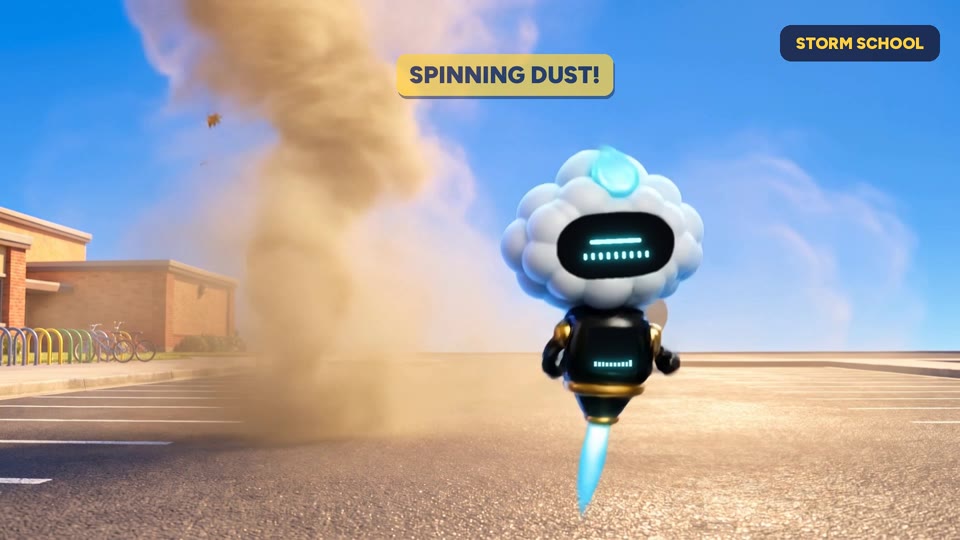
Have you ever seen a tiny spinning column of dust dancing across a parking lot or a field?